

Summer Gathering 2025:
Eco-Pedagogy through Natural Dyes
An immersive weekend experience for all educators*!
Join fellow educators* for a transformative weekend immersed in natural dyeing and ecological teaching practices
*This retreat is open to all educators across all content areas, grade levels, and expertise.
As summer blooms around us, join fellow educators for a transformative weekend immersed in natural dyeing and ecological teaching practices. This retreat offers more than a break from routine—it's an opportunity to cultivate inspiration and connection before the new school year begins.
Through a hands-on natural dye workshop paired with collaborative discussions about our work as educators, you'll discover how natural dyeing can serve as a gateway to broader concepts of sustainability, place-based learning, and ecological awareness.

This workshop offers more than just building your natural dye skills. Through engaging discussions and collaborative activities, you'll discover how natural dyeing can teach broader concepts of pedagogy, sustainability, art, and culture. You'll develop strategies for integrating these practices into your curriculum, fostering a holistic, ecological approach to education.
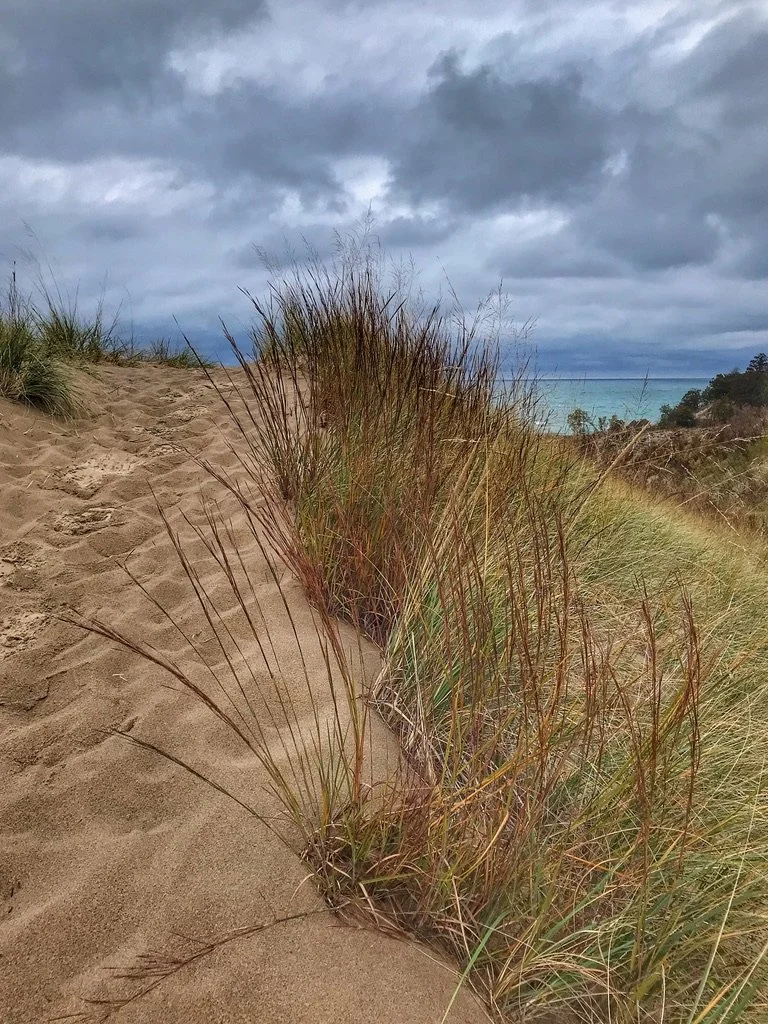
The weekend will be hosted in a variety of places: much of our dyeing and discussion will be at Three Moons Fiber Studio.
But Friday night’s opening circle, Yoga Nidra, and dinner will be hosted at a local yoga studio, with morning stretching and breakfast (maybe a dip?!) on the dunes near the water. We’ll have evening bonfires at camp.
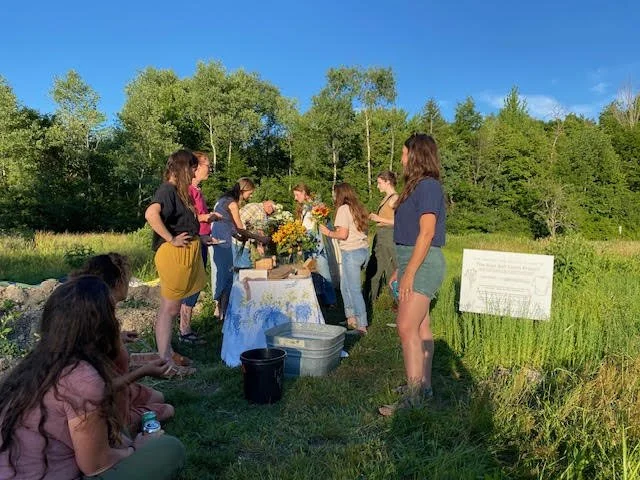
Participants can choose to join us at the Indiana Dunes campground to stay (included) as we’ve blocked three sites near each other, or book a hotel/airbnb on their own.
Nourishment provided by plant-forward meals based on seasonal, local produce.

Basic Agenda
Friday: 4pm: Get set up at camp (or in hotel if travelling), Yoga Nidra and dinner in town at a local studio, bonfire back at camp.
Saturday: Stretching and bagels/fruit on beach, then play with plants and color most of the day at Three Rivers Fiber Studio! We’ll make beautiful swatches & scarves, digging into discussion about ecology and how to help our students understand their genius here as a living being (despite everything pushing us towards a more mechanized existence). After the dying portion is over, we’ll have dinner in town (on your own or together!) and bonfire back at camp.
Sunday: Stretching and bagels/fruit on beach, indigo immersion, light lunch, closing circle around 1pm
By Weekend’s End, You’ll Have:
Practical knowledge of summer plant dyeing processes and techniques
A beautiful collection of dyed swatches documenting your experiments with plants
Fresh ideas for integrating ecological concepts into your teaching scenario (it’s bigger than dyes!)
Strategies for fostering belonging, flexibility, and authentic learning
A supportive network of educators to inspire you throughout the year
Renewed energy and purpose for the learning container you’re responsible for
Not into camping? No worries! Reach out to Emily for a list of hotels nearby!

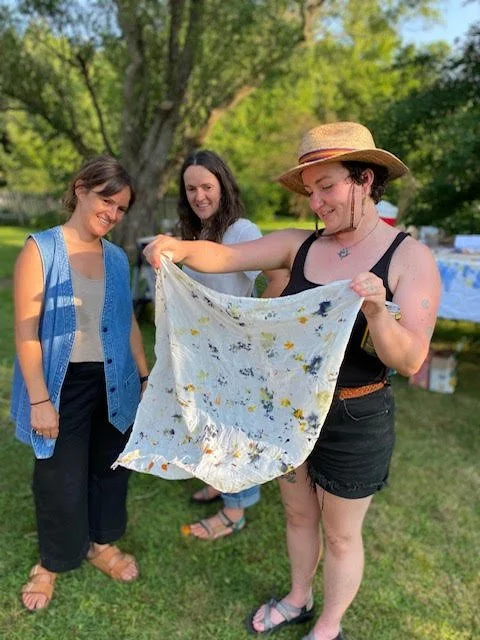

Over the weekend, you'll dive into the vibrant world of natural dyeing, discovering its potential to transform your classroom into a hub of ecological awareness and interdisciplinary learning. But this is more than just a workshop—we like to think of it more as a nourishing retreat!
“The natural dye workshop seamlessly blended science, art, and sustainability”
— Elyse Wilson, Middle School Learning Specialist, Cleveland, OH
About Your Instructors
〰️
About Your Instructors 〰️
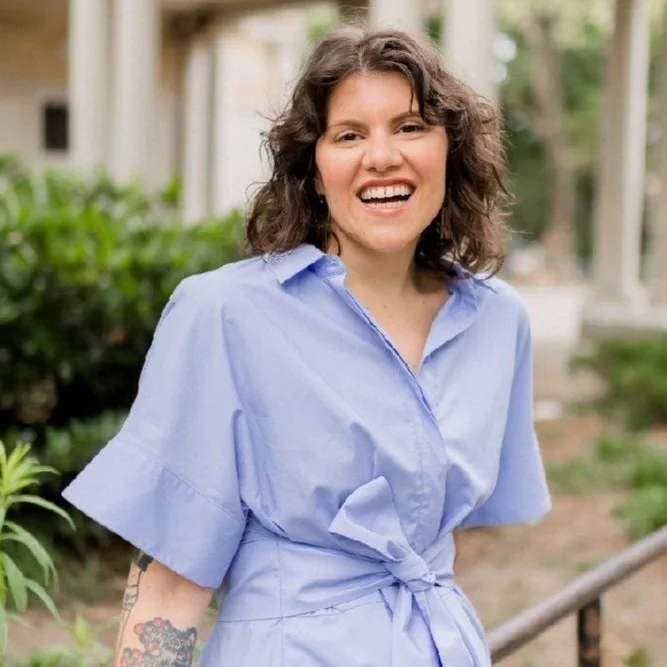
We (Jess and Sarah) are so excited to be leading this workshop in partnership with Dr. Emily Bretl of Marram Collaborative!
Emily, an educator herself at the University of Chicago, works with schools, organizations, and families to co-create transformative educational experiences at the intersection of artistry, ecology, and sustainability. Emily provides specialized knowledge of the dunes will support Jess and Sarah with specialized knowledge and practices in ecological science education, place-based teaching and learning, and arts-based curriculum design and instruction.
FAQs
-
Not at all! The workshop is appropriate for newbies and folks who have experience with natural dyes.
-
Mostly, yes! If you are responsible for a learning space or many learning spaces, or you support folks who are, this workshop is for you! This might mean you are a public school teacher, a university professor, a montessori teacher, a micro-school founder, a school administrator, etc. If you have questions, please don't hesitate to reach out to hi@driftlab.earth.
-
With any CEUs, you must have approval from your school first. Please show them this PDF and inquire if you need some additional form of documentation hi@driftlab.earth.
In our experience, this weekend should calculate for up to 20 CEUs, depending on your school/district. -
We’ll be staying at the Indiana Dunes Campground, included in your registration fee!
Of course, if you’re local and would just like to come for the days, that’s great! Or, if you’d like to book a nearby hotel or airbnb, you can still join us for the nightly bonfires!
There is a lot to do nearby if you want to extend the weekend. Trails, beaches, wineries, theaters, and more - we can provide recommendations.
-
A suggested packing list will be provided in advance, and will depend on if you’re camping or not!